

On demolition and construction sites, excavator attachments directly shape your job site productivity. Hydraulic shears and concrete pulverizers are two of the most widely used demolition tools. Both break materials down, but they work in totally different ways and are built for separate jobs.
If you are a contractor or equipment operator, knowing exactly how they differ helps you pick the right attachment and avoid costly mistakes on site. This guide breaks down how each tool works, its key benefits and typical use cases.
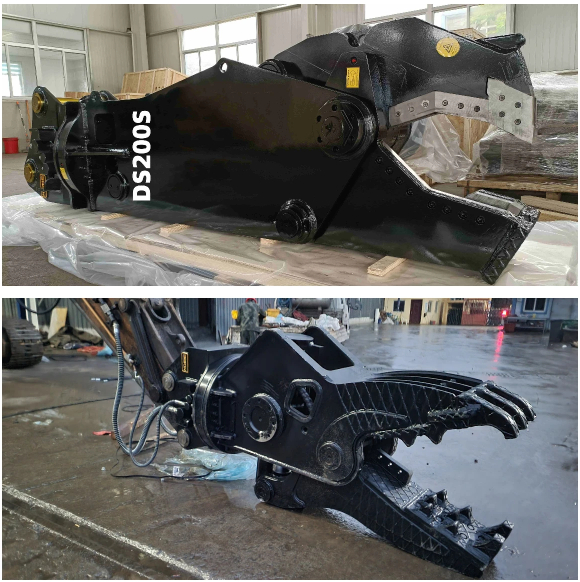
What Is a Hydraulic Shear?
Hydraulic shears are heavy-duty cutting attachments made mainly for metal work. Driven by excavator hydraulics, they generate massive clamping force to slice steel beams, rebar and structural metal quickly. Most models come with adjustable sharp blades so you can set different cutting angles for varied tasks.
Key Features of Hydraulic Shears
- • Scissor cutting action: Two blades close against each other under hydraulic pressure for clean, precise cuts.
- • Wide material range: Optimized for all kinds of steel. With different blade setups, they can also cut plastic and composite materials.
- • Flexible for multiple jobs: Great for demolition, scrap yards and metal recycling, especially when neat cuts are required.
- • Fast cycle times: Quick open-and-close movements let you process large volumes in less time.
Common Applications
- Building and bridge demolition: Cut steel frames and structural supports
- Scrap metal yards: Shred and separate mixed metal for recycling
- New construction: Cut rebar and steel parts to required sizes
What Is a Concrete Pulverizer?
Concrete pulverizers are purpose-built for crushing concrete. They perform best on concrete slabs, walls and foundations. Unlike shears that cut through material, pulverizers squeeze and crack concrete into smaller, easy-to-handle chunks, while separating rebar from concrete.
Key Features of Concrete Pulverizers
- • Crushing jaw design: Heavy jaws with hardened teeth apply squeezing pressure to split concrete apart.
- • Built for masonry and reinforced concrete: Handles standard concrete, blockwork and rebar-concrete structures.
- • High crushing force: Reinforced body and heavy hydraulic power to tackle thick, hardened concrete.
- • Dust suppression ready: Most units support dust control add-ons, which is ideal for urban demolition projects.
Common Applications
- Concrete structure demolition: Tear down concrete buildings, bridge decks and slab foundations
- Site clearing: Break up old concrete pavements to prepare ground for new works
- Concrete recycling: Reduce concrete rubble into reusable aggregate
Hydraulic Shear vs Concrete Pulverizer: Side-by-Side Comparison
These two attachments are both staples on demolition fleets, but the gaps are clear. Match the tool to the material you work with.
1. Core Job
Hydraulic shears are made to cut metal. Concrete pulverizers crush concrete and separate rebar.
2. Working Principle: Cut vs Crush
Shears deliver sharp, clean cuts. Pulverizers rely on squeezing force to crack solid concrete.
3. Materials They Handle
Choose shear for steel. Go with a pulverizer for concrete, brick and masonry.
4. Build & Structure
Shears rely on replaceable blades. Pulverizers use thick, wear-resistant crushing teeth.
5. Speed & Output
Shears cycle fast for metal. Pulverizers run slower for sustained crushing pressure.
6. Site & Environmental Needs
Pulverizers often feature dust suppression; shears produce little dust.
7. Purchase & Running Cost
Plan investment around regular workload instead of a one-size-fits-all approach.
8. Operator Training
Both need specific training for safety and full performance optimization.
9. Service & Maintenance
Shears need blade care; pulverizers focus on jaw teeth and crusher plates.
10. Latest Developments
Modern updates boost uptime and lower fuel use for better site efficiency.
Final Takeaway
For demolition contractors, knowing the difference between hydraulic shears and concrete pulverizers saves time and prevents wrong-tool headaches. They each excel in their own lane.
Grab a hydraulic shear when your priority is cutting steel. Pick a concrete pulverizer to crush concrete and free rebar from slabs. The right attachment directly improves your site efficiency and job profitability.
If you have any questions or would like to discuss your requirements, please feel free to contact us. Our team is ready to assist you.
Post time: Oct-21-2026


